
Shiftsmart - Find Work
ShiftsmartBusiness
3.921.23K Reviews
- Version
- 114.0.0
- Installs
- 1.00M
- Age Rating
- Everyone
Screenshots

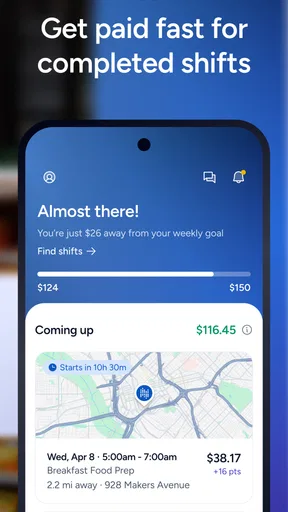
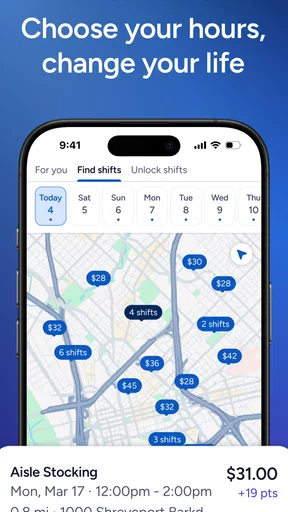
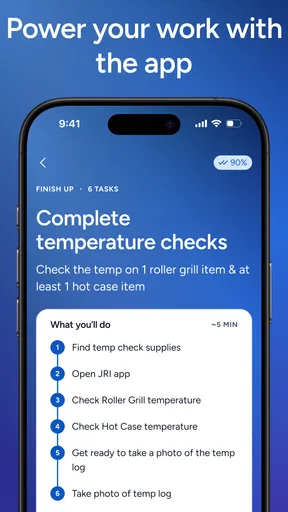
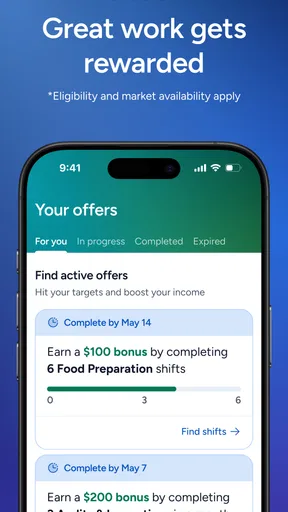
Our Review of Shiftsmart - Find Work
 Analysis by Appyee
I approached Shiftsmart - Find Work as a practical question rather than a promise of easy money: would it actually help someone find occasional work without turning the search into another full-time task? The app is built for people looking for part-time earning opportunities nearby, and that focus makes it more useful for some situations than a traditional job board. It is free to install, aimed at everyone, and developed by Shiftsmart.
My overall impression is that the app makes the most sense when you want flexibility and are willing to check opportunities regularly. It is not a replacement for a stable job, and I would not treat it as a guaranteed income source. Instead, I see it as a mobile work-search tool for filling gaps, testing different kinds of shifts, or finding a way to earn around an existing schedule.
How I Decided Whether Shiftsmart Was Worth Using
The first thing I would consider is not the app itself but the kind of work I need. Someone searching for a permanent position, a remote career, or a carefully planned professional role may be better served by a conventional employment platform. Shiftsmart is more relevant if the priority is finding nearby part-time work and keeping control over when to accept it.
That distinction matters because flexible work apps can look similar at first glance while serving very different purposes. A standard job board is usually organized around applications, résumés, interviews, and longer hiring timelines. Shiftsmart is more appealing when the practical question is, “What work can I take on around my current commitments?” That makes it a particularly interesting option for people with changing availability.
I would also judge it by location. The app’s usefulness depends heavily on whether suitable opportunities appear near you. A polished interface cannot solve the basic problem of having too few relevant shifts in your area. Before relying on it, I would open it during the times I am normally available and see whether the listings fit my travel range, schedule, and experience.
A second decision point is payment timing. The store positioning emphasizes opportunities that pay within days, which is attractive when the goal is to handle a short-term expense or smooth out an uneven month. Still, I would plan conservatively. “Within days” is useful for planning, but it should not be treated like instant cash available immediately after every shift.
The app has been available since June 8, 2017, and its current release is version 108.0.0. It supports devices running Android 7.0 or later. Those details make it accessible to many older Android phones, although I would still keep the operating system updated where possible because work-related apps are more comfortable to use on a device that is reliable and secure.
The kind of user who gets the most value
I think Shiftsmart is best suited to someone who already knows their available hours. For example, a parent might use it to look for work during school hours, while a student could check for shifts that do not conflict with classes. Someone with an irregular primary job may also appreciate having another place to look when their weekly schedule changes.
It can also suit a person who wants to try flexible work without immediately committing to a fixed schedule. That does not mean every opportunity will be suitable, but the format encourages a more selective approach: check the location, timing, expected duties, and practical travel cost before deciding whether a shift is worth accepting.
I would be more cautious about recommending it to anyone who needs a guaranteed weekly income. Availability can vary, and the existence of an app does not automatically mean there will always be enough suitable work. If missing a target amount would create a serious problem, I would use Shiftsmart only as a supplement while keeping a more dependable income source.
A realistic way to use it during an ordinary week
Imagine I have a regular job with changing hours and need extra income for an upcoming bill. Rather than opening the app randomly whenever I remember, I would check it at the start of the week, note the opportunities that match my free days, and compare them with the actual cost of getting there. I would then review the details again before committing, because a shift that looks attractive at first can become less worthwhile after transport, meals, or unpaid travel time.
After completing suitable work, I would keep a simple record of the date, location, time spent traveling, and money received. That habit is more important than it sounds. It shows whether the app is genuinely improving my income or merely filling my calendar with low-value commitments. It also helps me identify which types of shifts are worth checking first the next time I open the app.
The most useful mindset is to treat Shiftsmart as a filter for opportunities, not as a promise that work will always be waiting. That small change in expectations makes the experience more realistic and helps prevent rushed decisions.
Where Shiftsmart Wins Against Traditional Job Searching
Its strongest advantage is focus. Instead of asking users to search through every kind of employment listing, Shiftsmart centers the experience on part-time earning opportunities. That narrower purpose can save time for someone who is not looking for a long recruitment process.
I also like the way the app’s purpose connects location and availability. For flexible work, those two factors are often more important than an impressive job title. A nearby shift that fits an open afternoon may be more useful than a better-looking opportunity that requires a long commute or clashes with existing responsibilities.
The free price removes an obvious barrier to trying it. I can explore the app without paying an upfront subscription, which is helpful when I am still deciding whether flexible work is practical in my area. Free access does not remove the need to calculate travel and time, but it does make the initial decision easier.
Its audience size also suggests that this is not a brand-new experiment. Shiftsmart has more than a million installs, alongside an average rating of 4.0 from about fifty-three thousand ratings and roughly twenty thousand written reviews. I would not treat those figures as proof that every user will have the same experience, but they do indicate that the app has attracted substantial attention from people exploring this type of work.
Small habits that make the app more useful
One practical habit is to check opportunities with a specific purpose instead of endlessly browsing. I would decide in advance whether I am looking for a weekday shift, a weekend option, or work close enough to avoid expensive transportation. This makes it easier to reject listings that technically fit but are poor choices in real life.
Another is to compare the complete time commitment rather than only the scheduled hours. A short shift may require considerable travel, preparation, and waiting. When I evaluate it as a block of time from leaving home to returning, I get a much clearer picture of its real value.
I would also avoid accepting work simply because it is available. Flexibility is only helpful when the arrangement remains manageable. Taking too many scattered shifts can create fatigue and transportation costs that erase the benefit. The app works better when I use it to support a plan rather than letting every notification dictate my week.
A third useful approach is to build a repeatable review routine. After each completed opportunity, I would ask whether the location was convenient, whether the timing worked with my responsibilities, and whether the payment justified the total effort. This turns the app into a personal learning tool. Over time, I can become more selective instead of making every decision from scratch.
What the rating and free access do not tell me
An average rating is a helpful starting point, but it does not answer the questions that matter most to an individual user. A person living in a busy area may see a very different selection from someone in a smaller community. Likewise, one user may value quick access to occasional work while another may be frustrated by limited choices.
The free download is also not the same thing as free participation in every practical sense. I still need a working phone, internet access, transportation, appropriate clothing or equipment for the opportunity, and enough time to complete the work. Those surrounding costs are easy to overlook when an app itself does not charge an entry fee.
For that reason, I would use the app for a trial period while tracking real results. I would not judge it after one quiet visit, but I would also not keep checking indefinitely without evidence that it is helping. A short, deliberate test gives a better answer than either immediate dismissal or blind loyalty.
When Another Category of App May Be Better
Shiftsmart is not automatically the best choice for every employment goal. If I wanted a permanent position with predictable hours, I would probably focus on conventional job boards, employer career pages, or local recruitment services. Those alternatives are designed around longer-term hiring rather than quick access to part-time opportunities.
If my priority were freelance professional work, I would look at platforms built around portfolios, proposals, and client relationships. A designer, translator, developer, or consultant usually needs tools that showcase past work and support project discussions. Shiftsmart’s flexible-shift focus is a different model and may not match that kind of career search.
Someone who already knows they want delivery, driving, or another specialized form of independent work may also prefer a service dedicated to that category. A specialist platform can be easier to understand when its entire workflow is built around one type of task. Shiftsmart is more useful when I want to explore available part-time options rather than commit to a single work format.
There is also a case for local community groups and direct employer contact. In some areas, a nearby business may advertise occasional work through its own channels before it appears in a broader app. Direct contact can sometimes provide more context about duties and expectations, although it may require more effort and offer less organized browsing.
The trade-off between flexibility and certainty
The central trade-off is simple: flexible opportunities can fit around life, but they may not provide the predictability of a fixed schedule. I would choose Shiftsmart when control over availability matters more than knowing exactly how many hours I will receive every week.
If I needed a dependable amount of money on a fixed date, I would combine it with something more stable. That might mean keeping regular employment, using a traditional job search, or speaking directly with local employers. The app can support a wider plan, but I would hesitate to make it the only pillar of my finances.
Another trade-off is convenience versus selectivity. A centralized app makes searching easier, but convenience can encourage quick acceptance. I would still read each opportunity carefully and consider the full commitment. The fastest option to accept is not necessarily the best option to complete.
I would also think about how much uncertainty I am comfortable with. People who enjoy adapting their week may find the format liberating. People who prefer a settled routine may find repeated checking and changing availability tiring. Neither reaction is wrong; it simply determines whether this particular approach feels helpful or stressful.
What Switching to Shiftsmart Really Involves
Moving from a traditional job search to a flexible-work app changes the way I plan. Instead of preparing one strong application and waiting for a response, I need to stay attentive to available opportunities and make quicker practical judgments. That can feel efficient, but it also places more responsibility on me to manage time and expectations.
The first cost is attention. Even when the app is easy to browse, finding a worthwhile opportunity requires checking schedules, locations, and personal commitments. I would set a specific time to review it rather than repeatedly interrupting my day. That keeps the search from becoming a background distraction.
The second cost is planning around transportation. A nearby opportunity is not necessarily inexpensive to reach. I would estimate the complete journey before accepting, especially if public transport, parking, fuel, or long walking distances are involved. This is one of the most important calculations because a shift’s headline payment does not show the full net benefit.
The third cost is routine. Flexible work can make it tempting to accept more than I can comfortably handle. I would leave room for rest and unexpected changes, particularly if I already have another job or family responsibilities. A system that helps me earn extra money is not successful if it makes the rest of my week unmanageable.
On the positive side, the switch can reduce the friction of discovering possibilities. I do not need to rely only on word of mouth or visit several places to ask whether occasional work is available. The app gives me a dedicated place to begin, which is valuable when I want to explore options without making a long-term commitment immediately.
Questions I would answer before relying on it
Would I receive money quickly enough for an urgent expense? The app is designed around payment within days, so it may be more suitable than a conventional hiring process for short-term planning. I would still keep a buffer because the exact timing of any individual opportunity matters to my budget.
Can I use it with an older Android phone? The minimum requirement is Android 7.0, so many older devices may qualify. I would make sure the phone has enough battery, storage, and a dependable connection, since work searches are not useful if the device fails when I need it.
Is it suitable for teenagers? The content rating is Everyone, but that rating describes general app suitability rather than automatically confirming eligibility for every work opportunity. I would pay attention to the requirements attached to each opportunity and follow applicable employment rules.
Should I install it if I need remote work? I would probably look elsewhere first. Shiftsmart’s purpose is centered on nearby part-time earning opportunities, so someone specifically seeking online professional work may get better results from a platform designed for remote projects or employment.
How long should I test it? I would give it enough time to check different days and availability patterns, then compare the actual opportunities with my needs. The important measure is not how often I open the app, but whether I can find work that remains worthwhile after travel, time, and scheduling are considered.
My Recommendation for Shiftsmart
I recommend Shiftsmart to people who want a flexible way to look for local part-time work and are comfortable making their own decisions about timing and value. It is especially worth trying if my schedule changes from week to week, I want to supplement another income source, or I need a more direct alternative to a lengthy job application process.
I would not recommend depending on it alone when I need guaranteed hours, a predictable salary, or a specialized professional career path. In those situations, a traditional employer, a focused freelance platform, or a specialist work service may be a better match. The app’s strength is flexibility, and that same flexibility is its main limitation.
Shiftsmart is free, broadly accessible, and established enough to deserve a fair trial. Its 4.0 average rating shows a generally positive but not flawless reception, which feels consistent with the reality of location-based flexible work: results can depend on where I live, when I am available, and how carefully I choose.
My final advice is to start with a clear target. Decide how many hours you can genuinely offer, calculate your travel costs, and judge each opportunity by the total time involved. If the app helps you find suitable work without disrupting the rest of your life, it can be a useful addition to your income strategy. If it produces too little relevant work or demands more checking than it is worth, switching to a more specialized or traditional alternative is the sensible choice.
In my view, Shiftsmart - Find Work succeeds when used as a practical supplement rather than a financial guarantee. I would keep it on my phone if I valued nearby, part-time possibilities and wanted another route into flexible work, but I would pair it with realistic budgeting and a backup plan.
Privacy and Permissions
See what permissions an app requests and how it handles your data.
- Calendar
- read calendar events plus confidential information, add or modify calendar events and send email to guests without owners' knowledge
- Contacts
- read your contacts
- Location
- approximate location (network-based), precise location (GPS and network-based)
- Photos/Media/Files
- read the contents of your USB storage, modify or delete the contents of your USB storage
- Storage
- read the contents of your USB storage, modify or delete the contents of your USB storage
- Camera
- take pictures and videos
- Microphone
- record audio
- Wi-Fi connection information
- view Wi-Fi connections
- Other
- view network connections, full network access, run at startup, draw over other apps, control vibration, prevent device from sleeping, read Google service configuration
Verdict
Strengths of Shiftsmart - Find Work
- Flexible shifts let you choose work around your schedule.
- Clear job listings show pay, location, and shift details upfront.
- In-app check-in and time tracking simplify attendance.
- Useful filters help narrow opportunities by distance and job type.
- Regular shift notifications can help you find new work quickly.
Limitations of Shiftsmart - Find Work
- Available shifts may vary significantly by city and demand.
- Some roles require background checks or additional eligibility steps.
- Pay timing and methods can differ depending on the assignment.
- Late cancellations or filled shifts may reduce your earning options.
- The app may request location access and other personal information.
Similar Picks in This Category
View All
LinkedIn: Community & Network
LinkedIn3.8

Zoom Workplace
zoom.com4.1

Microsoft Teams
Microsoft Corporation4.6

Meta Business Suite
Meta Platforms, Inc.4.6

Webex Meetings
Cisco Systems, Inc.4.5

TeamViewer Remote Control
TeamViewer4.4
Frequently Asked Questions
What is ShiftSmart, and how does it help people find work?
ShiftSmart is a flexible-work platform that connects workers with available shifts from businesses seeking temporary, part-time, or on-demand staff. After creating a profile, you can browse opportunities based on location, schedule, and job type. The app is designed for people who want to choose individual shifts rather than commit to a fixed traditional work schedule, although availability can vary by area.
What types of jobs and shifts are available on ShiftSmart?
The available work depends on your location and the companies operating in your region. Shifts may include retail support, merchandising, inventory checks, event assistance, customer service, delivery-related tasks, cleaning, or other operational roles. Each listing normally includes information about the assignment, expected duties, location, time, and estimated pay. Read the requirements carefully because some shifts require specific experience or equipment.
How do I sign up and qualify for shifts on the app?
To use ShiftSmart, you generally need to create an account, provide personal and work-related information, and complete any required identity, eligibility, or background verification steps. Certain opportunities may also require training, certifications, transportation, or a short approval process before you can accept them. Keep your profile accurate and complete, since missing information or failed verification may limit the shifts visible to you.
How and when are ShiftSmart workers paid?
Payment terms can differ depending on the shift, client, location, and the payment method available in your account. The listing should provide an estimated or stated rate before you accept the assignment, while payment is typically released after the shift is completed and approved. Review the app’s current payment policies carefully, including processing times, possible adjustments, and whether instant or expedited payment options involve fees.
Is ShiftSmart available everywhere, and is it suitable as a full-time job?
ShiftSmart availability is market-dependent, so users in some cities may find many opportunities while others may see very few or no active shifts. The platform can be useful for flexible income, occasional work, or filling gaps between jobs, but it should not automatically be treated as a guaranteed full-time position. Shift volume, scheduling, pay, and worker requirements may change frequently.
